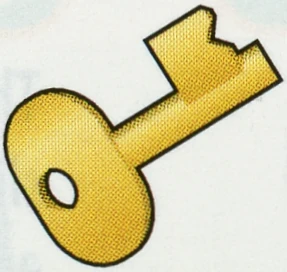
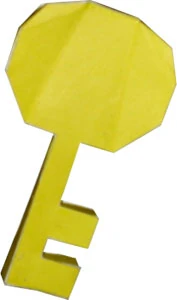
Keys are items used for various purposes that appear in many games of the Mario franchise. Though their appearance and usage vary, they are typically used to open a locked door or a secret path.
Super Mario Bros. 2 is the first Mario game to feature keys and locked doors, both first appearing in World 1-2. All keys in this game are guarded by Phantos, one of which will chase the player until the key is dropped or used to unlock a door. Unlike many other items in the game, keys are always visible without having to be rooted up like a vegetable.
Most keys are out in the open, but at least one was guarded by a Birdo in World 7-2.
Super Mario World
In Super Mario World, keys and keyholes can be found in various levels. Bringing a key to a keyhole activates the respective level's secret exit. Like other items in the game, keys can be carried around and dropped or kicked upwards, but they will have no effect on a keyhole unless held by the player. Yoshi can carry a key in his mouth, but will swallow it if it remains in his mouth for too long. The location of a key does not reset when it is scrolled off the screen.
Super Mario 64 / Super Mario 64 DS
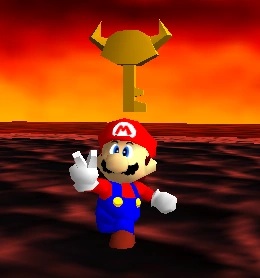
Mario gets a Big Key in Super Mario 64.
An image of the unused key
In Super Mario 64, there are only two Big Keys[1][2][3][4] in the game, and they can be found in two Bowser levels: Bowser in the Dark World and Bowser in the Fire Sea. Mario gets them when Bowser is defeated. The keys can open the doors of the Mushroom Castle. The first key opens the door to the castle's basement, and the second key opens the door to the castle's upper floors. If a player attempts to open the door to the upper floors with the basement key, a message will appear to let the player know that that key does not fit the lock.
In Super Mario 64 DS, the Big Keys retain their purpose from the previous game, but there are other kinds of keys. First, there are those that rabbits steal. The first key Yoshi has to obtain unlocks the Mushroom Castle; only after he catches the first rabbit can he get inside the castle. There are many other rabbits that can be found in the game, but they unlock only minigames. Three of the second kind of key the player must collect are held by three bosses (Goomboss, King Boo, and Chief Chilly) and are used to free Mario, Luigi, and Wario. The third kind of key is obtained by catching the eight glowing rabbits that randomly appear in place of the regular ones after 50 Power Stars have been collected. The key opens the white-bordered door in the princess's room, which contains a secret Power Star.
A Key appears in the World-e level Doors o' Plenty in Super Mario Advance 4: Super Mario Bros. 3. While it is carried in the same way as in Super Mario World, its function is to open Key Doors, as in Super Mario Bros. 2.
New Super Mario Bros. series
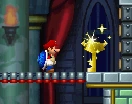
Mario wins a key in World 3.
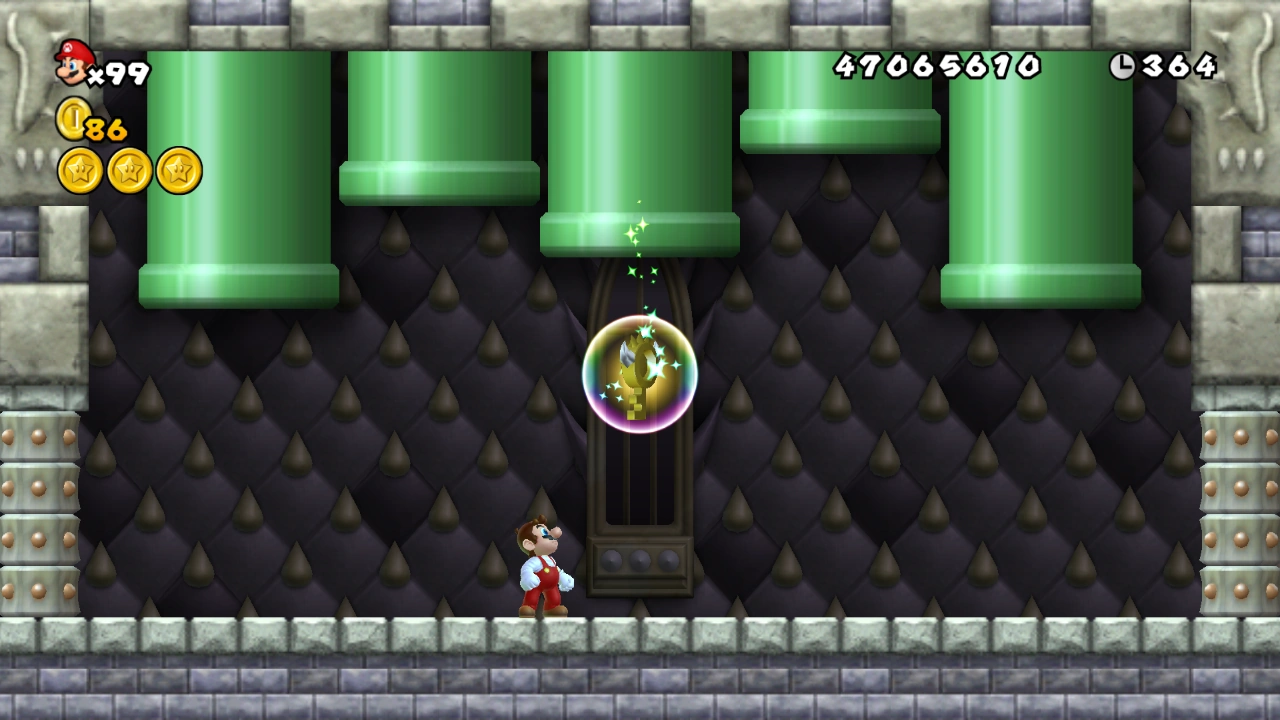
Mario sees a key after defeating Roy Koopa in New Super Mario Bros. Wii.
In New Super Mario Bros., at the end of each World from 2 to 7, Mario faces off against a boss. If he wins, a key will be granted.
In New Super Mario Bros. Wii and New Super Mario Bros. 2, when Mario defeats any of the Koopalings at their castles, he will receive a key that he must grab to exit the castle. This item does not serve any purpose other than finishing and closing the level. However, in the Coin Battle mode of New Super Mario Bros. Wii, the player that collects the key receives five coins.
Super Mario Galaxy
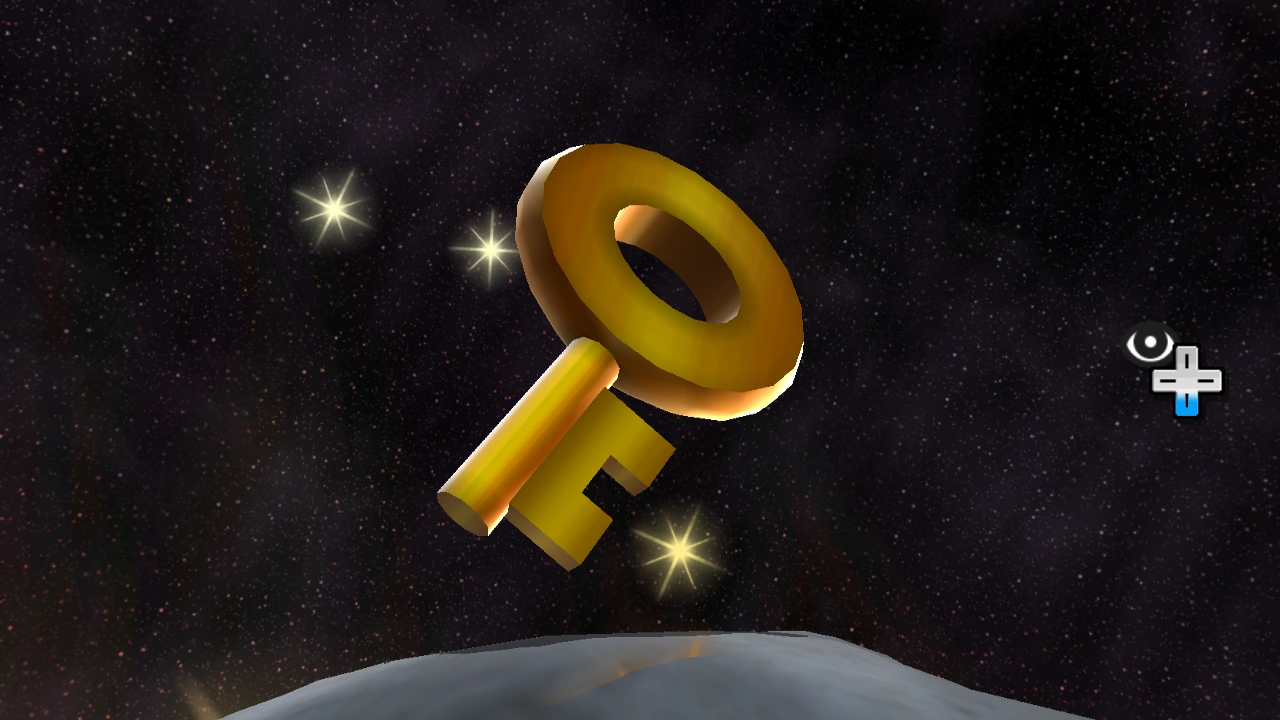
In Super Mario Galaxy, keys can be collected to automatically open locked doors or force fields. They are found in galaxies such as the Gateway Galaxy and the Ghostly Galaxy. In the Gateway Galaxy and Ghostly Galaxy, a Grand Goomba and a Boo, respectively, each hold a key which is released after Mario or Luigi defeats the enemies.
Super Mario Maker / Super Mario Maker for Nintendo 3DS
An update released on March 9, 2016, for Super Mario Maker allowed players to add keys to levels. They can be placed in blocks, or in an enemy, making them obtainable after Mario defeats it. Additionally, another new item included in the update, the Pink Coin, reveals a key once Mario collects every single one in the level. A key does not need to be directly held onto by Mario, as it automatically follows him after obtaining it, similar to the keys in the Yoshi's Island series. Up to eight keys can be obtained at one time.
In Super Mario Odyssey, keys make a reappearance, albeit slightly redesigned. They unlock locked panels which contain Power Moons when collected.
Super Mario Maker 2
Keys return in Super Mario Maker 2. In the Super Mario 3D World style, they resemble the key symbols seen on Key Coins in the original game. In multiplayer, a player can stomp on another player who is holding a Key to grab the Key for themselves. If the player holding the Key is defeated, the Key enters a bubble, allowing other players to grab it.
A variant of the key called the Cursed Key was made available with the version 3.0.0 update exclusive to the Super Mario Bros. game style. When a Cursed Key is picked up, a Phanto is spawned.
Super Mario 3D World + Bowser's Fury
Keys reappear now with cat ears in the Bowser's Fury campaign of Super Mario 3D World + Bowser's Fury, appearing specifically when a Key is needed to open a cage containing a Cat Shine. Unlike in previous games, the key must be carried all the way back to the lock, rather than simply touching it. They also disappear if they are on the ground other than their initial spawn point for too long, or if they get thrown into water, the black goop, or lava. In these cases, the key will respawn back at its original location.
Super Mario World animated series
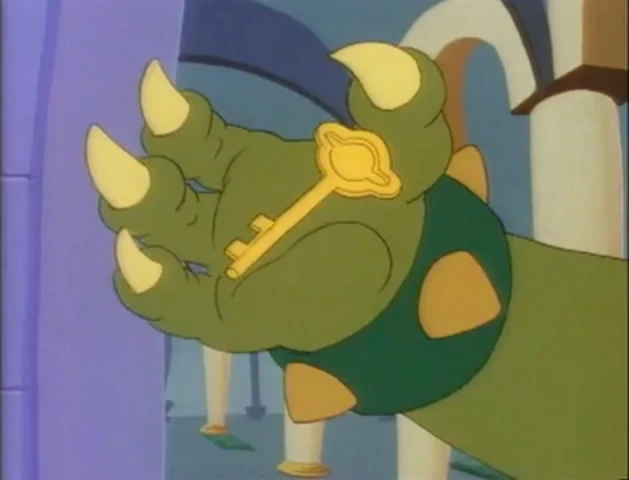
King Koopa holding a key in "Mama Luigi".
Keys appear in the Super Mario World cartoon in the episodes "Ghosts 'R' Us" and "Mama Luigi". In "Ghosts 'R' Us", when Wizenheimer is defeated, Oogtar uses a ? Block, causing a key to appear, and uses it for the door. In this episode, it makes the same sound as a Cape Feather. In "Mama Luigi", King Koopa shows a key off, gloating that the Mario Bros. will never be able to find Princess Toadstool without it. However, Yoshi then eats it, and after Koopa retreats, he spits it out and it opens the cell the Princess was being held in.
Yoshi franchise
NES (left), Game Boy (right)
Throughout the Yoshi franchise, keys utilize their design from the Mario franchise.
Keys appear in Yoshi, after the player clears levels 22 through 24 of the B-Type game, rewarding the player with 1,000 points.
In Yoshi's Story, keys are required to open locked doors in the Lift Castle, Ghost Castle, and Magma Castle. They are obtained by defeating a certain ComBat in the Lift Castle, popping a certain ? Bubble in the Ghost Castle, and defeating the two slugs in the Magma Castle. One key in the Ghost Castle is out in the open in an underground section.
Bowser owns various keys in the Mario Party series. These so-called Bowser Keys are usually found in Bowser Minigames, and are necessary to escape from Bowser. In earlier Mario Party games, Bowser Keys are simply keys shaped like Bowser's head. In later games, they are engraved with Bowser's likeness. The minigame Locked Out from Mario Party 3 features keys with key heads shaped like mushrooms, flowers and stars.
Paper Mario series
Paper Mario
There are many key designs in Paper Mario and its sequel, but each only opens doors in the area they are found. There are Castle Keys for every castle and fortress, and various others keys in different locations. In Paper Mario, they were used in Tubba Blubba's Castle, Bowser's Castle, and Peach's Castle. Tubba Blubba's keys look like three-leaf clovers, while Bowser's look like a gold three-leaf clover with a blue ball in the middle. There are about three of Tubba's keys and five of Bowser's keys. Peach's Castle Keys are pink versions of Bowser's Castle Keys. Also, a living key called Yakkey locked the Gusty Gulch Windmill.
Keys appear as items in Captain Toad: Treasure Tracker and its Nintendo Switch and Nintendo 3DS ports. They can be obtained from Pluck Patches, and always open locked doors. They can also be thrown at enemies to defeat them. Akin to other items in the game, Captain Toad and Toadette carry the keys atop their head.
If a stage is cleared while a key is outside its Pluck Patch, the key rewards the player with one coin.
Dr. Mario World
A key in Dr. Mario World
In Dr. Mario World, keys appear as stage objects where they first appear in World 8. The keys in this game are all found inside bubbles, meaning that they will float upwards until they hit an object. The bubbles containing the keys cannot be removed until it comes into contact with a door, after which it will disappear. Like the bubbles in this game, the keys that are currently floating cannot be reacted to, such as when Dr. Petey Piranha's hits the bottom-most objects in each column (therefore the key is not treated as the bottom-most object while floating), except by pushing it upwards with a capsule. Moreover, the Hammer Bro. assistant will affect the floating speed of the key when equipped by slowing down the floating. When a capsule match is made next to the keys, the skill meter will be filled with an extra point for each key that it is made next to, even though the key will not be removed. The keys, as stage objects, appear exclusively in stage mode.
In versus mode, keys are items in which the player can be rewarded by winning versus matches. They are used to unlock battle boxes, of which the player can obtain three out of the nine possible rewards. The default number of keys required to unlock battle boxes is five since version 2.1.0 and seven prior to that, but only three are required on certain weeks. On certain weeks since season 3, specialists have the benefit of winning two keys instead of one if any of them are used to win the match.
The Super Mario Bros. Movie
In the teaser poster for The Super Mario Bros. Movie, voxelated keys resembling their sprite in Super Mario World can be seen being sold at the antiques store for two coins each.
Profiles
Super Mario Bros. 2
Wii Virtual Console manual: "This item opens a locked door."
Yoshi's Island: Super Mario Advance 3
Nintendo 3DS Digital Manual description: "Take a key to a door with a keyhole in it to open it."
Slip Slidin' Away • Lil' Penguin Lost • Big Penguin Race • Frosty Slide for 8 Red Coins • Snowman's Lost His Head • Wall Kicks Will Work (N64)/Mario's Super Wall Kick (DS) • Switch Star of Cool, Cool Mountain (DS)
Big Boo's Haunt
Go on a Ghost Hunt • Ride Big Boo's Merry Go Round • Secret of the Haunted Books • Seek the 8 Red Coins • Big Boo's Balcony • Eye to Eye in the Secret Room • Switch Star of the Basement
Hazy Maze Cave
Swimming Beast in the Cavern • Elevate for 8 Red Coins • Metal-Head Mario Can Move! (N64)/Metal-Head Wario Can Move (DS) • Navigating the Toxic Maze • A-Maze-Ing Emergency Exit • Watch for Rolling Rocks • Underground Switch Star
In the Talons of the Big Bird • Shining Atop the Pyramid • Inside the Ancient Pyramid • Stand Tall On the Four Pillars • Free Flying For 8 Red Coins (5th Star, N64) (7th Star, DS) • Tox Box Switch Star (DS) • Pyramid Puzzle
Snowman's Big Head • Chill with the Bully • In the Deep Freeze (N64) • Yoshi's Ice Sculpture (DS) • Whirl from the Freezing Pond • Shell Shreddin' for Red Coins (N64) • Snowman's Silver Star (DS) • Into the Igloo • Red Coins in the House (DS)
Wet-Dry World
Shocking Arrow Lifts! • Top o' the Town • Secrets in the Shallows and Sky (N64)/5 Secrets in the Shallows and Sky (DS) • Express Elevator--Hurry Up! • Go to Town for Red Coins (N64)/Go to Town for the Red Coins (DS) • Quick Race Through Downtown! • Soaked Silver Stars (DS)
Tall, Tall Mountain
Scale the Mountain • Mystery of the Monkey Cage • Scary 'Shrooms, Red Coins • Mysterious Mountainside • Breathtaking View from Bridge (Star 5, N64)/Breathtaking View from the Bridge (Star 7, DS) • Blast to the Lonely Mushroom (Star 6, N64) (Star 5, DS) • 5 Secrets of the Mountain
Cruiser Crossing the Rainbow • The Big House in the Sky • Coins Amassed in a Maze • Swingin' in the Breeze • Tricky Triangles! • Somewhere over the Rainbow • Switch Star of the Manor
Bob-omb Sudden Death • Bob-omb Trampoline • Jumping Sudden Death • Jumping Brothers • Lakitu Launch • Vs. Mario's Slides • Vs. Pair-a-Gone • Vs. Trampoline Time
Dino Piranha • A Snack of Cosmic Proportions • King Kaliente's Battle Fleet • Dino Piranha Speed Run* • Purple Coin Omelet* • Luigi on the Roof
Honeyhive Galaxy
Bee Mario/Luigi Takes Flight • Trouble on the Tower • Big Bad Bugaboom • Honeyhive Cosmic Mario/Luigi Race* • The Honeyhive's Purple Coins* • Luigi in the Honeyhive Kingdom
Pull Star Path • Kamella's Airship Attack • Tarantox's Tangled Web • Pull Star Path Speed Run* • Purple Coin Spacewalk* • Yoshi's Unexpected Appearance
Rolling Green Galaxy
Rolling in the Clouds
Battlerock Galaxy
Battlerock Barrage • Breaking into the Battlerock • Topmaniac and the Topman Tribe • Topmaniac's Daredevil Run* • Purple Coins on the Battlerock* • Battlerock's Garbage Dump • Luigi under the Saucer
Hurry-Scurry Galaxy
Shrinking Satellite
Bowser's Star Reactor
The Fiery Stronghold
Sling Pod Galaxy
A Very Sticky Situation
Beach Bowl Galaxy
Sunken Treasure • Passing the Swim Test • The Secret Undersea Cavern • Fast Foes on the Cyclone Stone* • Beachcombing for Purple Coins* • Wall Jumping up Waterfalls
Bubble Breeze Galaxy
Through the Poison Swamp
Ghostly Galaxy
Luigi and the Haunted Mansion • A Very Spooky Sprint • Beware of Bouldergeist • Bouldergeist's Daredevil Run* • Purple Coins in the Bone Pen* • Matter Splatter Mansion
Bunnies in the Wind • The Dirty Tricks of Major Burrows • Gusty Garden's Gravity Scramble • Major Burrows's Daredevil Run* • Purple Coins on the Puzzle Cube* • The Golden Chomp
Freezeflame Galaxy
The Frozen Peak of Baron Brrr • Freezeflame's Blistering Core • Hot and Cold Collide • Frosty Cosmic Mario/Luigi Race* •Purple Coins on the Summit* • Conquering the Summit
Dusty Dune Galaxy
Soaring on the Desert Winds • Blasting through the Sand • Sunbaked Sand Castle • Sandblast Speed Run* • Purple Coins in the Desert* • Bullet Bill on Your Back • Treasure of the Pyramid
Honeyclimb Galaxy
Scaling the Sticky Wall
Bowser's Dark Matter Plant
Darkness on the Horizon
Bigmouth Galaxy
Bigmouth's Gold Bait
Gold Leaf Galaxy
Star Bunnies on the Hunt • Cataquack to the Skies • When It Rains, It Pours • Cosmic Mario/Luigi Forest Race* • Purple Coins in the Woods* • The Bell on the Big Tree
Sea Slide Galaxy
Going after Guppy • Faster Than a Speeding Penguin • The Silver Stars of Sea Slide • Underwater Cosmic Mario/Luigi Race* • Purple Coins by the Seaside* • Hurry, He's Hungry
Toy Time Galaxy
Heavy Metal Mecha-Bowser • Mario/Luigi Meets Mario • Bouncing Down Cake Lane • Fast Foes of Toy Time* • Luigi's Purple Coins* • The Flipswitch Chain
Bonefin Galaxy
Kingfin's Fearsome Waters
Bowser Jr.'s Lava Reactor
King Kaliente's Spicy Return
Sand Spiral Galaxy
Choosing a Favorite Snack
Deep Dark Galaxy
The Underground Ghost Ship • Bubble Blastoff • Guppy and the Underground Lake • Ghost Ship Daredevil Run* • Plunder the Purple Coins* • Boo in a Box
Dreadnought Galaxy
Infiltrating the Dreadnought • Dreadnought's Colossal Cannons • Revenge of the Topman Tribe • Topman Tribe Speed Run* • Battlestation's Purple Coins* • Dreadnought's Garbage Dump
Matter Splatter Galaxy
Watch Your Step
Melty Molten Galaxy
The Sinking Lava Spire • Through the Meteor Storm • Fiery Dino Piranha • Lava Spire Daredevil Run* • Red-Hot Purple Coins* • Burning Tide
Missions marked with an asterisk (*) are exclusively available while a Prankster Comet is in orbit. Missions marked with two asterisks (**) are only available when receiving a letter from Mailtoad.
Binoculars • Boulder • Bowser Statue • Cactus • Jizo • Letter • Manhole • Meat • Mini Rocket • Picture Match Part • Pole • Puzzle Part • RC Car • Spark pylon • Taxi • Tree • Zipper
Visit Koopa And Para-Koopa (World 2-1) • The Baseball Boys (2-2) • What's Gusty Taste Like? (2-3) • Bigger Boo's Fort (2-4) • Watch Out For Lakitu (2-5) • The Cave Of The Mystery Maze (2-6) • Lakitu's Wall (2-7) • The Potted Ghost's Castle (2-8) • Hit That Switch!! (2-★)
Welcome to Monkey World! (3-1) • Jungle Rhythm (3-2) • Nep-Enut's Domain (3-3) • Prince Froggy's Fort (3-4) • Jammin' Through The Trees (3-5) • The Cave Of Harry Hedgehog (3-6) • Monkey's Favorite Lake (3-7) • Naval Piranha's Castle (3-8) • Hit That Switch!! (3-★)
GO! GO! MARIO!! (4-1) • The Cave Of The Lakitus (4-2) • Don't Look Back! (4-3) • Marching Milde's Fort (4-4) • Chomp Rock Zone (4-5) • Lake Shore Paradise (4-6) • Ride Like The Wind (4-7) • Hookbill The Koopa's Castle (4-8) • The Impossible? Maze (4-★)
Scary Skeleton Goonies! (6-1) • The Cave Of The Bandits (6-2) • Beware The Spinning Logs (6-3) • Tap-Tap The Red Nose's Fort (6-4) • The Very Loooooong Cave (6-5) • The Deep Underground Maze (6-6) • KEEP MOVING!!!! (6-7) • King Bowser's Castle (6-8) • Ultimate Castle Challenge (6-★)
Rock 'n' Fall • High-Speed Cart Race • In the Clouds • Six Face Sal's Fort • Friend or Foe? • Slip Slidin' Away • Teeth-Chattering Chill Zone • Castle of Big Guy the Stilted • Hurry and Throw! • Let There Be Light! • Roulette
Rompin', Stompin' Chomps • Goonie Heights • Spear Guys' Village Found! • The Fort of Moltz the Very Goonie • The Cave That Never Ends • Find the Number Ball! • Superhard Acrobatics • At Last, Bowser's Castle! • Yoshi's Island Easter Eggs • Quit it Already, Tap-Tap! • Slot Machine
Rise of the Nasty Nep-Enuts (3-1) • Ukiki Jammin' (3-2) • Harry Hedgehog's Labyrinth (3-3) • Slime Drop Drama (3-4) • Don't Fear the Spear (3-5) • Ukiki Trouble in Clawdaddy Cove (3-6) • Lose the Lunge Fish (3-7) • King Clawdaddy's Sewer Castle (3-8) • Ride the Blarggwich (3-S)
Hop 'n' Pop Till You Drop (4-1) • Underground Pokey Patrol (4-2) • Spin-Lift Drift (4-3) • Fort Key Calamity (4-4) • Metal Eggdozers on a Roll (4-5) • Chomp Shark Chase (4-6) • Flatbed Ferry Freefall (4-7) • Furious Fred de Fillet's Castle (4-8) • See Poochy Run! (4-S)
Yarn Yoshi Takes Shape! • Bounceabout Woods • Sponge Cave Spelunking • Big Montgomery's Fort • Knitty-Knotty Windmill Hill • Shy But Deadly • Clawdaddy Beach • Burt the Bashful's Castle • Hang Tongue!
Across the Fluttering Dunes • Duplicitous Delve • Walk the Chomp to Unwind • Knot-Wing the Koopa's Fort • Spiky Stroll • Lava Scarves and Red-Hot Blarggs • The Desert Pyramid Beckons! • Bunson the Hot Dog's Castle • Perils of the Perplexing Pyramid
Yoshi and Cookies • Wobble Mobile Jaunt • Scarf-Roll Scamper • Big Montgomery's Bubble Fort • Fluffin' Puffin Babysitting • A-Mazing Post Pounding • Fanciful Fluff and Feathers • Miss Cluck the Insincere's Castle • Woollet Bill's Last Ride
Monkeying Round and Round • Lakitu Peekaboo • Rollin' Down the River • Knot-Wing the Koopa's Aqua Fort • Sunset at Curtain Falls • Spooky Scraps! Don't Get Spooked! • Yoshi Branches Out • Naval Piranha's Sewer • Naval Piranha 2: Now It's Personal!
Fluffy Snow, Here We Go! • Frozen Solid and Chilled • Flying-Carpet Cruise • Big Montgomery's Ice Fort • A Little Light Snowfall • Up Shuttlethread Pass • Snowy Mountain Lift Tour • Snifberg the Unfeeling's Castle • Yoshi's Curtain Call
Paper Bob-omb • Paper Boo • Paper Boomerang Bro • Paper Broozer • Paper Chain Chomp • Paper Dry Bones • Paper Fire Bro • Paper Fire Piranha Plant • Paper Fuzzy • Paper Goomba • Paper Hammer Bro • Paper Koopa Troopa • Paper Ninji • Paper Paragoomba • Paper Paratroopa • Paper Scaredy Rat • Paper Shy Guy • Paper Sombrero Guy • Paper Spear Guy • Paper Spike • Paper Spiny • Paper Swoop